


Benz Microscope Glass Insect Killing Jar for Entomology
- Sale price
- $13 USD
- List price
- $16 USD
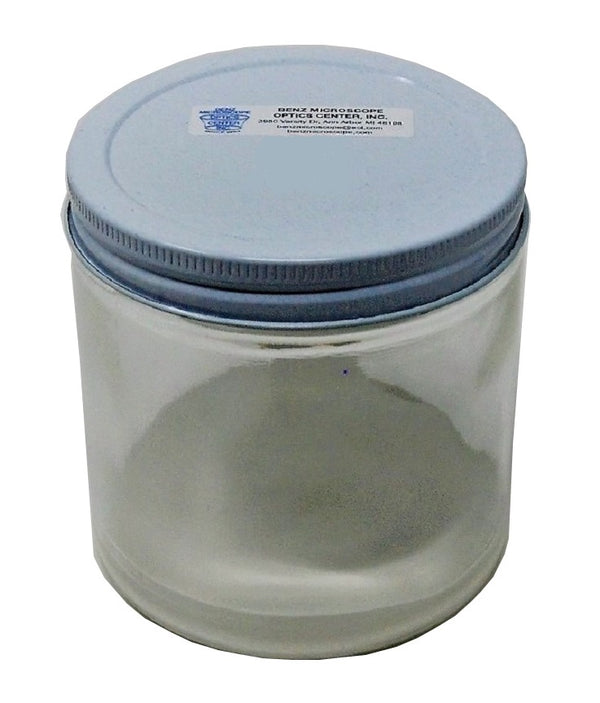
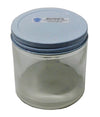
Benz Microscope Glass Insect Killing Jar for Entomology. Collecting bugs is a great, educational activity for all ages, and these jars will help you catch and put down your insects the proper way.
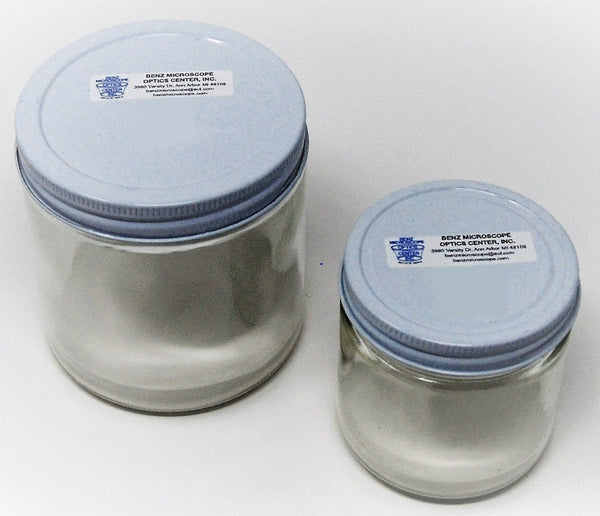
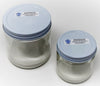
Each jar is considerately hand made, in-house, with a layer of plaster at the bottom. To use, simply pour a small amount of charging agent onto the plaster, secure the lid, and allow the vapors to fill the jar. Collect your specimen and place it inside. The jar is reusable and may be re-charged time, and time again. The lid contains a plastisol liner to keep the vapors from escaping while closed. Available in 2 sizes, small and large.
The small Jar measures apx. 2 -7/8" Diameter x 3-5/8" Height (73mm Dai. x 92mm H) and works great for small to medium sized specimens. The large Jar measures apx. 3-1/2" Diameter x 3-3/4" Height (90mm Dia. x 95mm H), suitable for largers specimens. Both are available with, or without, ethyl acetate for a charging agent. SKU 1108, 1116
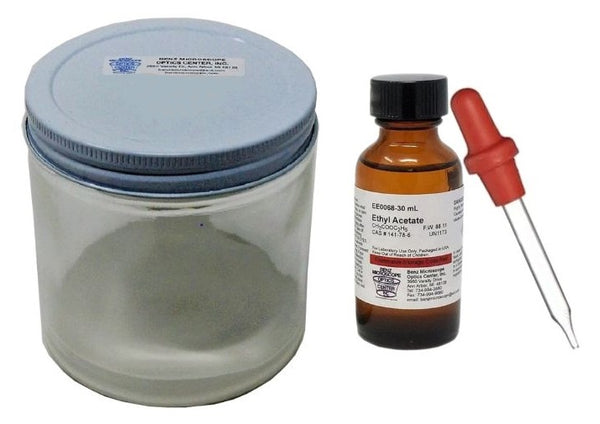
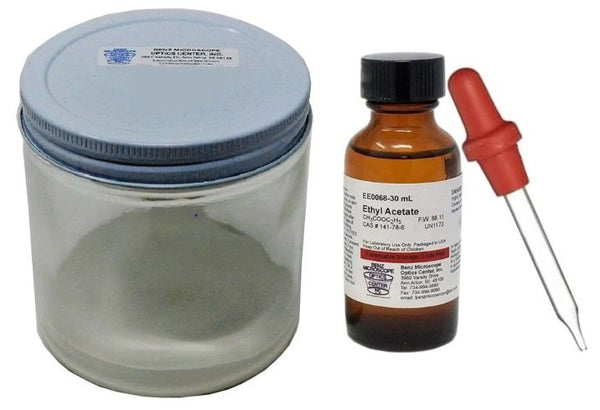
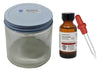
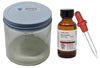
Ethyl Acetate is a common dispatching agent for killing specimens quickly, and thereby, minimiziing damage to wings and annentae. It is also useful for relaxing, preserving and de-clumping specimens. The included Barnes style dropper provides for controlled application using as little, or as much, of the agent as needed. Instructions for use and SDS sheet included. For adult use only, not intended for children. SKU 1108+, 1116+.
FEATURES:
- More humane method of dispatching insects
- Glass jar with screw top lid and plaster bottom is rechargable
- Charge plaster with a liquid dispatching agent. The fumes quickly dispel the insect
- Small Jar works well for small to medium sized insects
- Large Jar is suitable for larger insects.
-
Available with 30mL of Ethyl Acetate ( made in USA) and glass dropper
Click Here for Plaster SDS
DOT Info for Ethyl Acetate: Small quantity exemption for land and rail transportation only. (Cannot ship to Hawaii, PR, APO or FPO.)
- 5 stars: 11 (92%)
- 4 stars: 1 (8%)
- 3 stars: 0 (0%)
- 2 stars: 0 (0%)
- 1 star: 0 (0%)
Exactly what I wanted. Good for collecting and humanely euthanizing bugs for specimen collection (for student education so only 1 of each has to be collected). Highly recommend.
Terri was very helpful with purchasing and I really appreciate it.
The products were great as well.
Thank you for the positive review! We're very happy everything worked out for you, and hope you'll let us know if we can be of any further assistance. Best wishes to you, and your students, for a successful year!
Needed a quick and easy and portable kill jar, so this is a perfect solution. I ordered two — one for me and one for a friend who has no biology training and is interested in insect preservation. I was very pleased to see that the jar and vial of ethyl acetate came with a small rubber dropper and a little slip of paper with some simple instructions for beginners in addition to the detailed chemical data sheet. Haven’t used the jar yet but the seal seems good, and the plaster pour is neat and looks great. Definitely would buy again!
Thank you for the detailed review! We're sure your words will be helpful to other buyers, and we're happy that you're pleased with your purchase. Have a great day!
Nice seal and sturdy build
Thank you for the positive review! Small details are very helpful for other buyers, and we appreciate your feedback. We hope you'll visit us again, sometime!
Excellent and efficient communication and delivery, all questions answered promptly
Thank you for the positive review! We're glad we could help. Your business is appreciated and we hope you'll visit us again!
This company did an amazing job shipping us the kill jars quickly. There was excellent communication, response time, and shipping time. The University of Florida will definitely be using this company again in the future!
Thank you very much for the kind words! Our guests deserve the best service possible, and we very much look forward to serving you and the University of Florida in the future!
This product works fine, except for the fact that I notice quite a bit of odor from the 16oz jar even after I have tightened the lid as much as possible. This is particularly noticeable when I place the "charged" collecting jar in a plastic re-closable bag to protect it from damage while I am carrying it around. When the bag is opened, the trapped odor/fumes are especially strong coming from the bag where they have collected due to leakage from the jar. Note that while this is my first collection jar, it appears to me that the Ethyl Acetate liquid that I place in the jar loses it strength too quickly. So, I wonder if this is not related to the "large" amount of fumes escaping the jar as the Ethyl Acetate is essentially evaporating. I really am not sure why this apparent leakage of fumes happens. The glass jar has a metal screw-down lid with what appears to be a white (probably cardboard) liner. When tightening the lid as much as possible (when initially sealing the jar), if one comes back a few minutes later and checks the lid, there almost always seems to be a bit more of a "tightening" turn that can be obtained by turning the lid a bit more. My first thought was that the lid had been sealed to the jar in a cross-threaded/crooked position. But after inspecting the lid once it was tightened, it appeared to be level with the top plane of the jar and no evidence of cross threading was evident. My other theories as to why this situation is occurring include the possibility that the lid is not sitting level with the top of the jar (probably by a very slight amount), so that when tightened this allows some of the Ethyl Acetate fumes to escape. My second theory is that the cardboard liner absorbs some of the Ethyl Acetate fumes inside the jar and these fumes work their way to the outside edge of the cardboard liner (past the outer edge of the jar) and are escaping into the atmosphere where the odor is very noticeable, especially in a closed room or building. I am sure that if this jar had a lid similar to that of a food canning jar, this situation would not occur. However, since canning jar lids have a removable/replaceable liner with a rubber seal, I am not sure if this is would be a workable solution to the problem, or not. If I can find a canning jar lid that will fit the diameter of this collecting jar, I will certainly try this latter solution. The reason I think this might work is that (1) the canning jar lid liner is metal and will not absorb odors, and (2) the rubber outer edge seal of the lid liner will prevent any odor from escaping from the collecting jar. As the lid liner become worn along the rubber seal at the edge, it can easily be replace with a new one. There also might be other advantages to this type lid. For example, when removing the lid for collecting an insect, one can first remove only the outer tightening ring leaving the jar "sealed" to a degree by the metal lid liner. When the ready to make the insect collection, the metal lid liner can be quickly removed, the insect is then placed into the jar, and the metal lid liner quickly put back over the jar opening to minimize the amount of fumes escaping. The metal screw-down outer ring (like on a canning jar) can then be installed on the collection jar and tightened a minute or two later.
Thank you for your detailed review! In regard to the ethyl acetate, are you pouring in just a small amount and allowing it to soak into the bottom? Please note that any excess liquid that remains after after a few minutes should be poured out. It can be poured back into to the bottle, if desired. Also, we only use metal lids with plastisol liners for a good seal. They are, in fact, food jar lids. You'll notice the plastisol is applied where it makes contact with the jar. A cardboard liner wouldn't be nearly as effective. Please be sure to read the SDS form and follow all precautionary measures. Good luck!
My experience could not have been better, such warm, caring, &
professional people to do business with. I will always continue to
do business with. Bob Smith ( the old, nearly worn out, USAF
Chief Master Sergeant)
It’s still too cold here in Nevada to collect insects, but I love
everything about it, what a great way to put all my netted insects
in “bug heaven”! Will make a full and accurate report to you once
I start collecting insects here in Southern Nevada, at the Veterans
home.
Your excitement is contagious! It will be interesting to find out what types of insects you collect in the west, and we look forward to your report! We also very much appreciate your service to our country.
It’s still too cold here in Nevada to collect insects, but I love
everything about it, what a great way to put all my netted insects
in “bug heaven”! Will make a full & accurate report to you once
I start collecting insects here in Southern Nevada, at the Veterans
home.
Excellent product, as described, fast shipping, very well packed - Great Seller!!
Works great. To make the jar field ready I used tape to secure a small section of the included bubble wrap to the base and bottom sides to prevent a full break if dropped. Acetone is another alternative to the ethyl acetate
Thank you for the positive review, and the great tips! We hope you'll visit us again.